
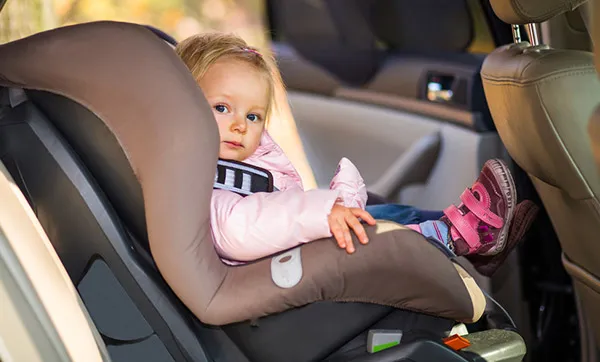
You flip the new car seat around to install it and there it is: a long strap with a metal hook dangling off the back. Where is that supposed to go? If you've ever patted around behind a headrest or lifted the cargo carpet looking for something to clip it to, you're in good company. That strap is the top tether, and finding its anchor is one of the most useful five minutes you'll spend on car seat safety.
Here's how tethers and anchors work, where to find them in your car, and the seats we'd choose to make it all easier.
Our quick picks
- Graco Extend2Fit 2-in-1: our top pick, a convertible with years of rear-facing and a tethered forward-facing harness.
- Graco 4Ever DLX 4-in-1: one seat from the first ride home to the booster years.
The terms, in plain English
- Top tether: the strap with a hook on the back of a convertible or forward-facing car seat. It attaches to a tether anchor in the car.
- Tether anchor: a sturdy metal loop built into your vehicle, just for car seat tethers.
- Lower anchors: two small metal bars in the crease between the vehicle's seat back and cushion.
- LATCH: Lower Anchors and Tethers for Children, the name for the whole system. Nearly every car built since the 2003 model year has it. (Want the backstory? See our guide to LATCH and car seat safety features.)
Where to find the tether anchor in your car
Your vehicle owner's manual is the final word. Look for the child restraint section, which shows exactly which seats have anchors. Many cars also mark them with a small car seat symbol. Here's where they usually hide:
- Sedans: on the rear shelf behind the back seat, sometimes under a flip-up plastic cover.
- SUVs and hatchbacks: on the back of the vehicle seat or on the floor of the cargo area. You may need to lift a carpet flap.
- Minivans: low on the back of the seat or on the floor behind it, especially for second- and third-row seats.
- Pickup trucks: often a loop of fabric webbing behind the headrest, sometimes shared by two seats. The truck's manual shows how to route the tether.
Make sure it really is a tether anchor. Cargo hooks, grocery-bag hooks and seat-folding hardware can look similar but aren't built for crash forces.
Finding the lower anchors
Run your hand along the crease of the back seat and you'll feel two short metal bars at each LATCH position. Some cars leave them exposed; others hide them behind small plastic guides or fabric. Your car seat's lower connectors may be hooks, push-on clips or rigid arms, and they all attach the same way: clip on, then pull the strap tight.
Most cars have lower anchors in only two seating positions, usually the outboard seats behind the driver and passenger. Don't borrow the inner anchors from those seats to install in the middle unless your vehicle and car seat manuals both say it's allowed.
How to use them the right way
- Rear-facing: install with the lower anchors or the seat belt. Most seats don't use the top tether rear-facing; a few are designed to, so check your manual.
- Forward-facing with a harness: install with the lower anchors or the seat belt, and always attach the top tether. It keeps the seat from pitching forward and reduces how far your child's head moves in a crash.
- Watch the lower-anchor limit. For a harnessed seat, lower anchors generally allow up to 65 lb combined, child plus seat. Follow whichever limit is lower in your car seat and vehicle instructions, then switch to a seat belt install and keep using the tether.
- Booster seats: the vehicle seat belt holds your child. If your booster has lower connectors, use them as the manual directs; they keep the booster in place, especially when it's empty.
- Snug it up: pull the tether tight after the seat is installed, and check that the seat moves less than an inch at the belt path.
Graco Extend2Fit 2-in-1: our top pick
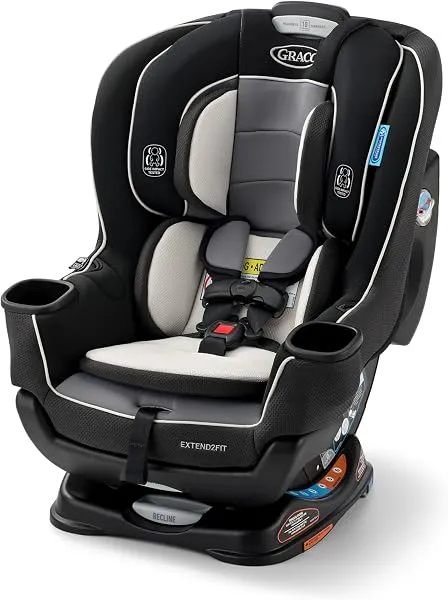
The Extend2Fit makes the "keep them rear-facing longer" advice genuinely doable. Its extension panel pulls out up to 5 inches to give growing legs more room, with a rear-facing range of 4 to 50 lb. When your child is ready to face forward, it becomes a harnessed seat from 26.5 to 65 lb, with the top tether doing its job.
It installs with either LATCH or the seat belt, so you can choose whichever gives the tightest fit in your car, and the no-rethread harness adjusts the straps and headrest together as your child grows. It's the convertible seat we recommend to most families.
Shop the Graco Extend2Fit on Amazon
Graco 4Ever DLX 4-in-1: buy once, use for years
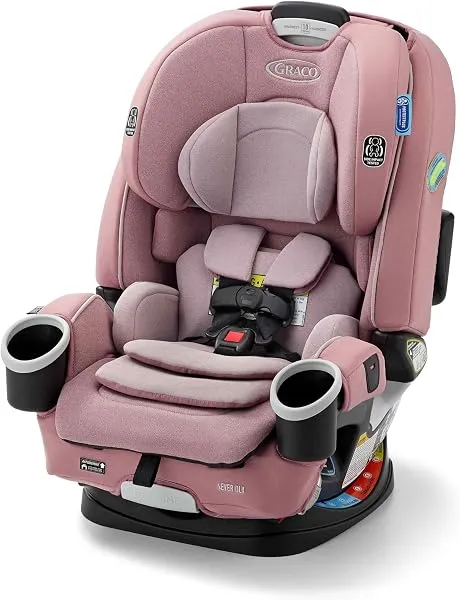
Like the idea of learning one install and sticking with it? The 4Ever DLX is designed for 10 years of use, starting as a rear-facing seat (4 to 40 lb), then a forward-facing harness seat with the top tether (26.5 to 65 lb), then a highback booster (40 to 100 lb) and finally a backless booster (40 to 120 lb).
A six-position recline helps you get the right angle in your car, and ten headrest positions keep the fit right at every stage. It's a big seat, but if you want one purchase to take your child from the hospital ride home to the school run, this is the one we'd pick.
Shop the Graco 4Ever DLX on Amazon
Keep your seat in top shape
- Check the expiration date. Every car seat has one, usually printed on a label or molded into the shell. Plastics and straps wear over time, so retire the seat when it expires.
- Replace after a crash as your seat's manufacturer directs; many recommend replacement after any crash.
- Register your seat so you hear about recalls right away.
- Keep the manual with the seat. Many seats have a storage spot for it, which is handy when you move the seat to another car.
- Know your state law, then follow the best-practice advice in our car seat buying guide, which often goes further.
Not sure you've got it right? A certified Child Passenger Safety Technician can check your install for free in many areas. Find one through Safe Kids Worldwide.
Our recommendation
Start by finding your car's anchors: five minutes with the vehicle manual will save you a lot of patting around later. Then choose a seat that makes it easy to use them. For most families, that's the Graco Extend2Fit: years of rear-facing room, then a tethered forward-facing harness up to 65 lb. If you'd rather buy once, the Graco 4Ever DLX carries on into the booster years.