Whether it's a quick hop to Grandma's or a long haul across the globe, the thought of taking your baby or toddler on a plane can make you want to stay grounded until they turn 18. You picture the screaming, the spilled snacks, the row of passengers turning around to stare.
Here's the good news: with a little preparation, a first flight can actually be fun. Your child gets to see the terminal, the big windows, the friendly crew and the clouds for the very first time, and you get to see it all through their eyes. Most of the work happens before you leave home: choosing where your child will sit, getting through security smoothly and packing the right things to keep them busy and comfortable.
Our quick picks for a first flight
- CARES Airplane Safety Harness: an FAA-approved restraint for toddlers that rolls up into a tiny bag.
- J.L. Childress Gate Check Bag: keeps your car seat clean and easy to spot when it isn't flying in the cabin.
- iClever BTH22 Toddler Headphones: volume-limited headphones sized for little heads.
- Munchkin Snack Catcher: familiar snacks without Cheerios all over the cabin floor.
Lap baby or their own seat?
On U.S. domestic flights, children under 2 can generally travel as lap infants without buying a separate seat, but you must add them to your reservation. Check your airline's requirements; international travel can require an infant ticket and fees. It's tempting, especially on a tight budget, but the FAA says the safest place for a child under 2 on a plane is in an approved car seat or device suited to their weight, not on your lap. Turbulence can strike without warning, and your arms simply can't hold a child securely through a hard jolt. Buying your child a seat is the way to make sure you can use one.
If your car seat is coming on board, check these before you fly:
- Look for the label. An approved seat says "This restraint is certified for use in motor vehicles and aircraft." Check for it before you go.
- Book a window seat. Car seats generally must go by the window so they don't block anyone's way out, and they can't go in an exit row.
- Keep babies rear-facing if their car seat says they should be. Follow the same limits you use in the car.
- Call your airline to confirm your family is seated together and that your car seat suits their aircraft.
Baby carriers, booster seats and backless restraints can't be used during taxi, takeoff or landing. If you're still choosing a car seat, our car seat guide walks you through every stage.
CARES Airplane Safety Harness: the toddler's travel seat belt
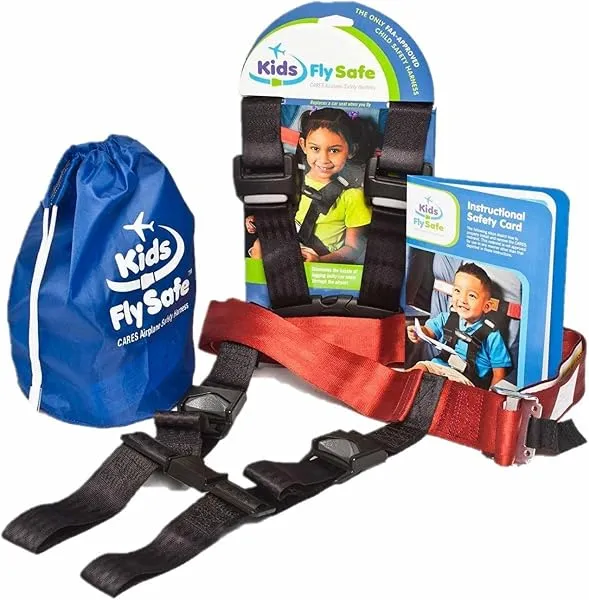
Lugging a car seat through the airport with a toddler, a stroller and a carry-on is a workout nobody signed up for. Once your child is big enough, the CARES harness is a brilliant alternative. It's the FAA-certified restraint for children who weigh 22 to 44 lb and are up to 40 inches tall, and it works with the plane's own lap belt to add shoulder straps that hold your child upright in their seat.
It loops around the seatback and installs in minutes, then rolls up into its little drawstring bag and disappears into your diaper bag. Your child needs their own seat, and they should be able to sit up on their own facing forward. It's made for airplanes only, so you'll still need a car seat at your destination; many families rent one with their car or borrow from relatives.
For a toddler who's outgrown the lap, this is the easiest way to keep them safely buckled from takeoff to landing, with both of your hands free for the snacks.
Shop the CARES harness on Amazon
J.L. Childress Gate Check Bag: protect the car seat you'll need on arrival
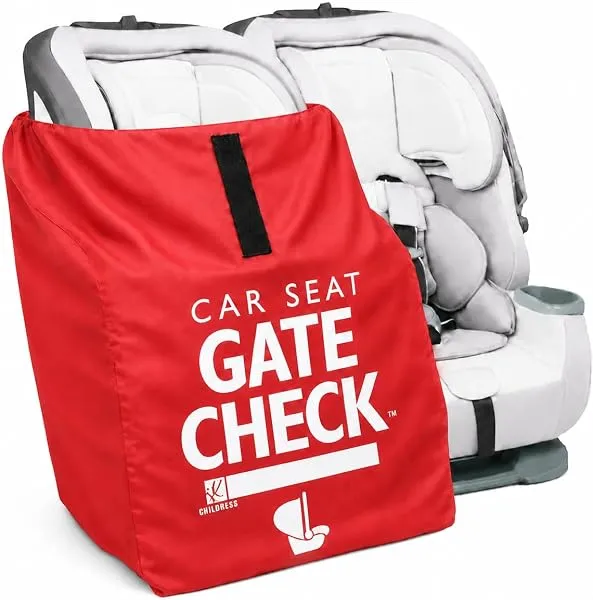
If your car seat isn't riding in the cabin, it's heading into the hold, and baggage handling is rough on fabric and buckles. This bright red bag slips over the seat and cinches shut with a lockable drawstring, keeping out dirt and rain until you're reunited at the gate or the carousel. The big "Gate Check" logo and ID window make it easy for you and the crew to spot, and a built-in AirTag holder lets you follow its journey if you add your own tracker.
When it's empty, it folds up small enough to tuck into your carry-on. It's a small purchase that keeps the seat your baby will ride in at the other end clean and ready to go.
Shop the J.L. Childress Gate Check Bag on Amazon
Breezing through security
Airport security is less stressful when you know what to expect:
- Formula, breast milk and baby food are allowed in your carry-on in quantities over 3.4 ounces, and they don't need to fit in your quart-size bag. That includes toddler drinks and puree pouches, plus ice packs and gel packs to keep things cold. Tell the officer at the start of screening and take these items out of your bag. If you'd rather they weren't X-rayed or opened, say so; officers will use other screening steps instead.
- Car seats, strollers and baby carriers are screened by X-ray when they fit; larger equipment gets a visual and physical inspection. Follow the officer's instructions for carrying your baby through the metal detector.
- Children 12 and under can usually keep their shoes, light jackets and hats on.
Pack the formula and snacks where you can reach them easily, and give yourself extra time. Everything takes longer with a little one, and that's okay.
Setting expectations (yours, not theirs)
Your little one is too young for a lecture on airplane etiquette, so the expectations you set are really for yourself. Babies and toddlers learn by moving. If your child wants to walk the aisle while the seatbelt sign is off, go with them. A plane full of new faces is fascinating to a curious toddler.
The fear that grips most parents is disturbing other passengers. Keep in mind:
- Flight attendants have seen it all, and many are parents themselves. If they need you to do something, they'll tell you.
- Plenty of the people around you have flown with little ones too, and they're usually more sympathetic than you'd expect.
- The occasional eye-roll or comment is rare. Feel free to ignore it.
Keeping them busy in the air
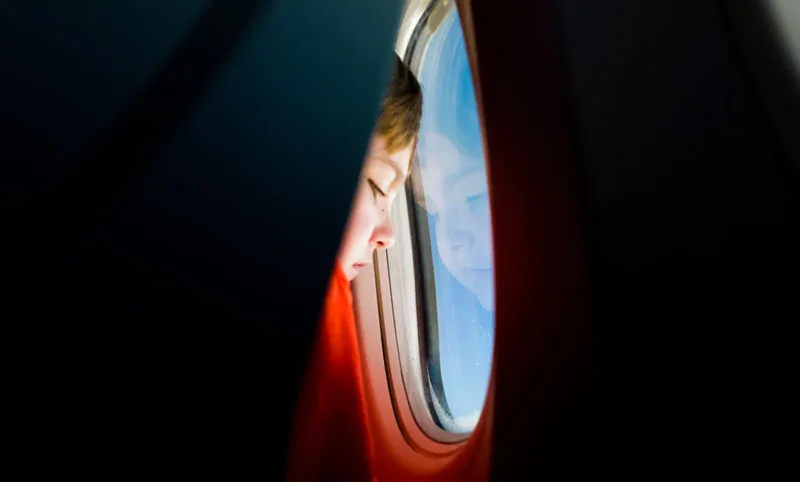
A window seat is magic for toddlers: watching the ground drop away during takeoff helps them make sense of all the rumbling and vibrating. About ten minutes after takeoff the novelty wears off, and that's when parent-as-entertainer begins. Pack a few small new toys, a couple of familiar favorites, and these two helpers.
iClever BTH22 Toddler Headphones
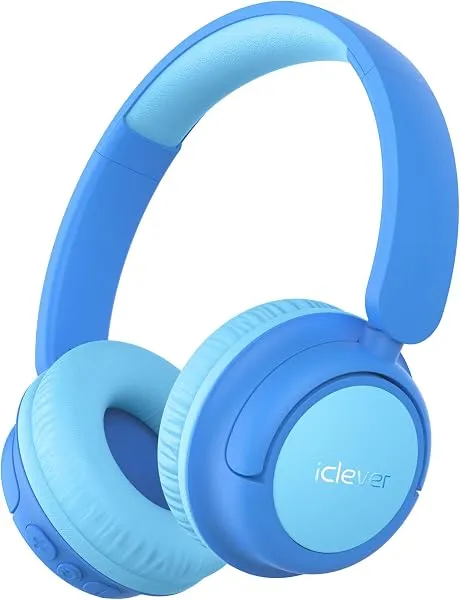
If a favorite show is part of your flight plan, give your child headphones made for small ears. The BTH22 limits volume to 85 dBA, with an even quieter 74 dBA toddler mode, and the adjustable headband and rotating ear cups fit kids from age 2. They connect by Bluetooth to a tablet, and the included 3.5mm cable plugs into seatback screens or keeps the cartoons going if the battery runs low.
Tip: let your child pick a color and practice wearing them at home, so they're a familiar treat rather than one more new thing on travel day.
Shop iClever BTH22 headphones on Amazon
Munchkin Snack Catcher
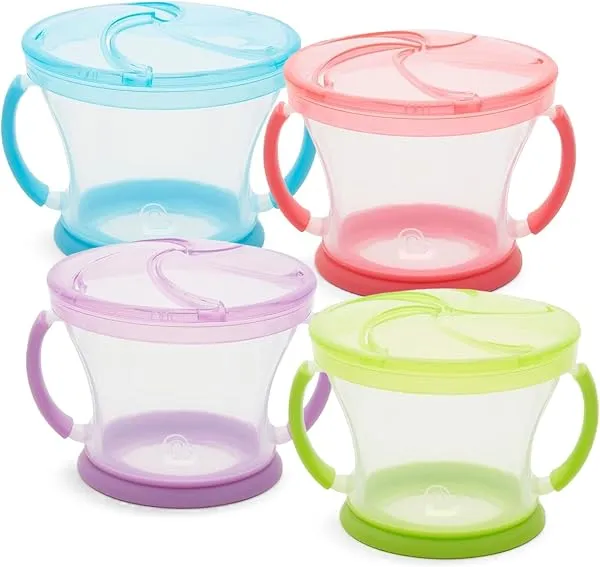
Familiar food is comforting in an unfamiliar place, and a snack is often the fastest way to turn a meltdown around. The Snack Catcher's soft flaps let little hands reach in for cereal or puffs while keeping most of it from spilling when the cup tips over on the tray table. You get four 9-ounce cups, made without BPA, for children 12 months and up, so you can pack one for each snack and keep a clean spare.
Let your toddler use one at home before the trip, and on the plane it'll feel like a little piece of home.
Shop the Munchkin Snack Catcher on Amazon
Happy ears on takeoff and landing
Pressure changes during takeoff and landing can make little ears uncomfortable. Nursing, a bottle or a pacifier helps, because swallowing and sucking ease the pressure. For older toddlers, a sippy cup or a snack does the same job. Our tips for flying with a baby cover this and more in-flight survival tricks.
Planning a trip with a newborn? Pediatricians suggest waiting until your baby is 2 to 3 months old if you can, although flying is generally considered safe after the first week. Check with your pediatrician first, especially if your baby was born early or has a health condition.
Going with the flow
In the end, the best thing you can pack is a good attitude. Your child takes their cue from you, so show them how exciting this adventure is. If they have an all-out meltdown anyway, remember they're not the first and won't be the last. Comfort them as best you can.
Once they've calmed down or the wheels touch the ground, tell them what a great job they did, and talk about the fun waiting at the other end. That first flight is a milestone for both of you.
Our recommendation
Give your child their own seat if you can. If they've outgrown the infant stage and you'd rather leave the car seat in its bag, the CARES harness is the travel buy we'd make first: tiny to pack, quick to install and FAA-certified for toddlers. Add a Gate Check Bag to protect your car seat for the drive at the other end, and pack a pair of iClever headphones and a Snack Catcher for the flight itself.