
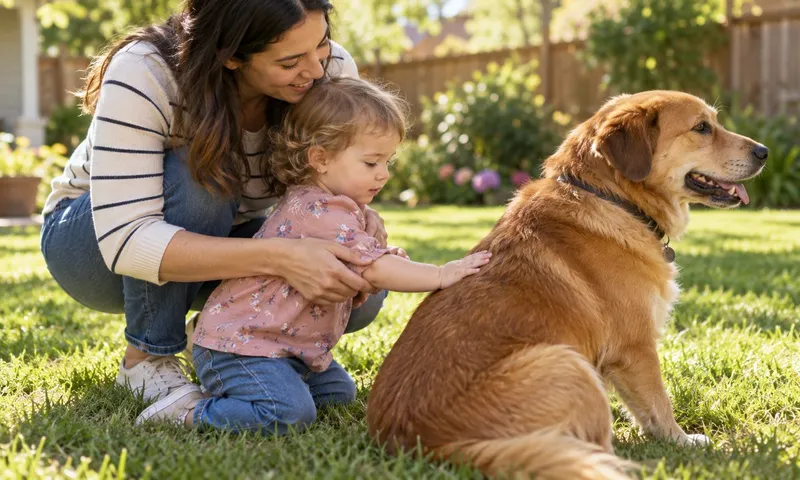
Your toddler spots a fluffy dog at the park and makes a beeline for it, arms wide open, ready for a big hug. It's one of the sweetest sights there is, and one of the moments when a few simple rules make all the difference. Dogs and kids can be the best of friends, and teaching both of them how to get along is the best way to keep it that way.
Each year, more than 4.5 million people in the US are bitten by dogs, and of the roughly 800,000 who need medical care, at least half are children. Kids are the most likely to be seriously hurt, often on the face, head or neck, because they're so close to a dog's height. And here's the part that surprises many parents: most bites to young children come from a dog they know, often the family dog or one that's well known to the family, during ordinary, everyday play. The good news is that most bites can be prevented, and prevention starts at home.
Our quick picks
- Tails Are Not for Pulling: a board book that teaches toddlers gentle hands.
- May I Pet Your Dog?: our top pick, the how-to guide for meeting a new dog, for ages 2 to 5.
- Don't Lick the Dog: a funny, smart guide to dog body language for ages 4 to 7.
- Toddleroo Bright Choice Auto Close gate: an easy way to give your dog and your toddler their own space.
The golden rule: always supervise
Never leave a baby or young child alone with a dog, even the gentle family dog you'd trust with anything. Any dog can bite, especially when it's startled, hurting, tired or pestered. That doesn't mean keeping them apart all the time; it means an adult is right there when they're together, and when you can't watch, they're in separate spaces.
A few habits help keep everyone happy at home:
- Give your dog a safe retreat. A crate, bed or gated room where your dog can rest without little hands following is good for everyone.
- Skip the rough games. Wrestling and tug-of-war can get out of hand fast, so steer kids toward calmer games like fetch, with a grown-up nearby.
- Let sleeping dogs lie. Teach kids never to bother a dog that's sleeping, eating, chewing a toy or caring for puppies. Dogs are more likely to snap in those moments, even with people they love.
- Invest in your dog. Training and socializing help your dog feel comfortable around children and visitors. If your dog growls, snaps or nips, even occasionally, talk to your veterinarian or a qualified trainer or behaviorist sooner rather than later.
- Keep visits calm. When the delivery driver or other visitors come to the door, have your dog safely in another room before you open it.
What to teach your kids
Children often read dogs completely wrong. A wagging tail doesn't always mean "come pet me," and a hug that feels loving to your child can feel like a trap to a dog. These are the rules worth practicing until they're second nature:
- Always ask first. Ask the owner, and then a grown-up, before petting any dog. If the answer is no, that's okay.
- Never approach a dog on its own. Leave dogs alone if they're behind a fence, in a car, tied up or without their owner.
- Let the dog come to you. Stand still and let the dog sniff you first. Then pet gently, away from the face and tail.
- No hugs, kisses or faces up close. Most dogs don't enjoy them, and that's how many face bites happen.
- Move calmly. Running, shrieking and flapping arms can make a dog chase or jump.
- If a dog acts scary, be a tree. If a dog growls, barks or comes toward you, stay calm, stand still with your arms at your sides, look away and, once the dog loses interest, back away slowly. Practice "being a tree" at home with a stuffed dog.
- If you get knocked down, be a rock. Curl up in a ball and cover your face and eyes with your arms and fists. Stay still until the dog goes away.
Learn the warning signs
Dogs usually tell us they're uncomfortable long before they bite. Teach older kids, and remind yourself, to give a dog space when you see a stiff body, a tucked tail, ears pinned back, nose licking or yawning, the whites of the eyes showing, raised fur, bared teeth or a growl. A dog that turns or walks away is asking to be left alone, so let it go.
Books that make dog safety fun
Kids remember stories far better than rules. These three books turn dog safety into something children actually want to read again, and they give you an easy way to start the conversation before your next trip to the park.
Tails Are Not for Pulling: gentle hands for toddlers
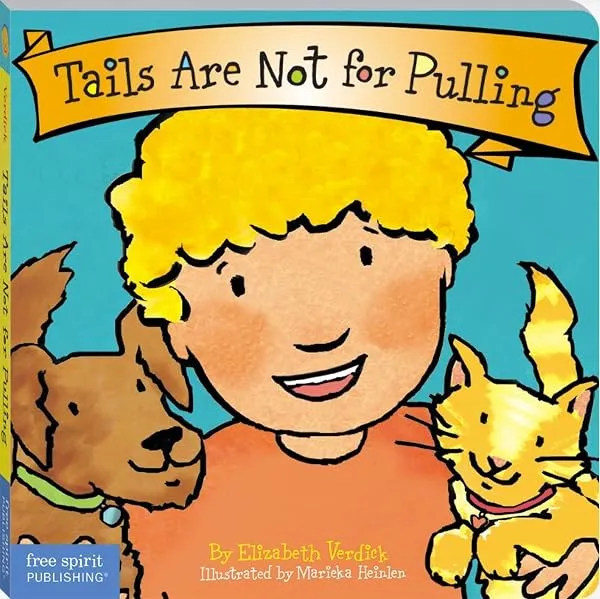
Toddlers and pets go wonderfully together, as long as nobody grabs, squeezes or yanks. This sturdy board book from the Best Behavior series uses simple words and warm pictures to teach little ones how to touch animals kindly. It's a great fit for ages 1 to 3, and a perfect pick if a new puppy is about to join the family.
Shop Tails Are Not for Pulling on Amazon
May I Pet Your Dog?: our top pick
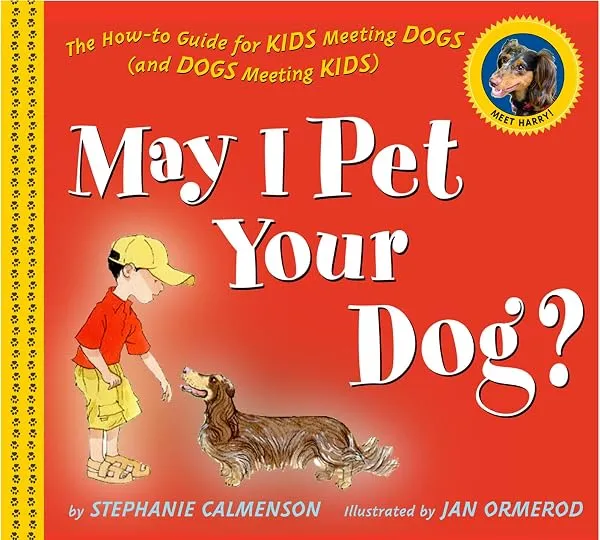
Stephanie Calmenson's charming guide, narrated by Harry the dachshund, shows kids the right way to meet a dog, starting with the all-important question in the title. Jan Ormerod's warm illustrations feature all kinds of breeds and personalities in situations that feel real but never scary, so it reassures nervous kids and slows down the ones who rush in. It's best for ages 2 to 5.
Shop May I Pet Your Dog? on Amazon
Don't Lick the Dog: dog body language, made funny
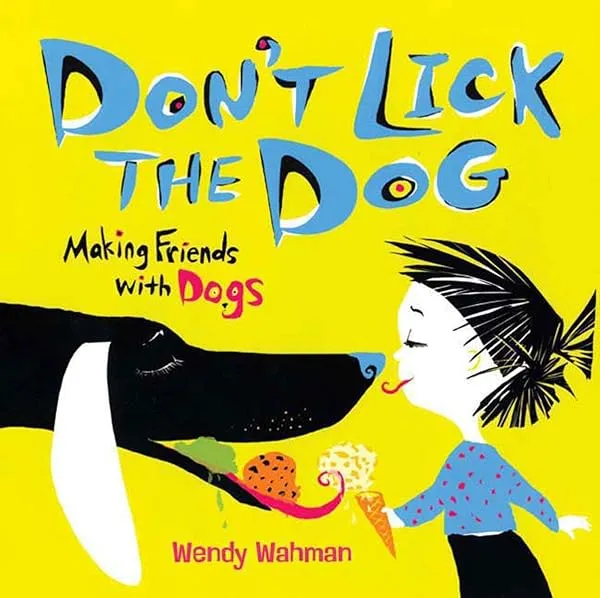
Wendy Wahman's playful how-to manual makes kids laugh while teaching them what different dogs are really saying, from the friendly to the "please back off." It's ideal for ages 4 to 7, when children are meeting more dogs at friends' houses and in the neighborhood, and its bold illustrations make it one kids pick up again on their own.
Shop Don't Lick the Dog on Amazon
Toddleroo Bright Choice Auto Close: a little space for everyone
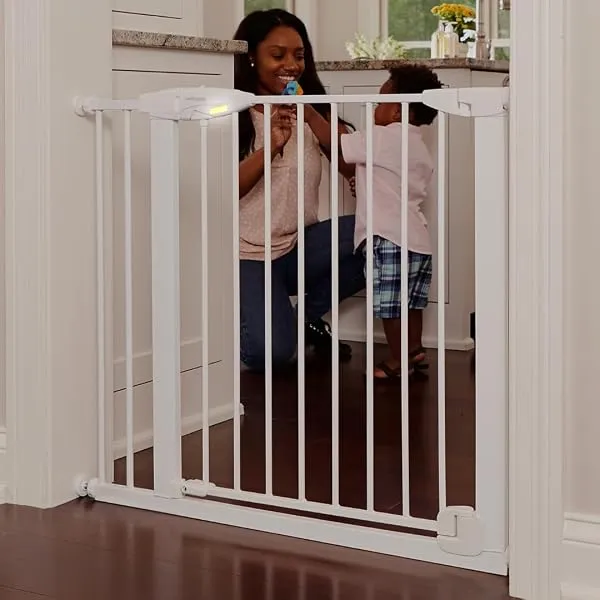
When you can't keep your eyes on both your toddler and your dog, a gate is the easiest way to keep them apart, and to give your dog a calm place to nap or eat without tiny visitors. The Bright Choice is our favorite drill-free gate for doorways: its 22-inch walk-through door closes automatically behind you, and it fits openings from 29.75 to 40.5 inches wide with the included extensions.
It pressure-mounts in doorways, hallways and at the bottom of the stairs, never at the top. See our baby gate guide for top-of-stairs picks and more ideas.
Shop the Toddleroo Bright Choice on Amazon
If your child is bitten
- Get help fast for serious bites. If the bite is severe or bleeding heavily, call 911 or go to the emergency department.
- Wash the wound right away with soap and water.
- Call your pediatrician, even for a bite that looks minor. Bites can need antibiotics, a tetanus shot or rabies shots, and your doctor can help you report the bite.
- Get the details. Ask the dog's owner for proof of rabies vaccination, their name and contact information, and the name and phone number of the dog's veterinarian. Let the doctor know whether the dog has bitten before.
Our recommendation
The most powerful dog-safety tool is a grown-up who's watching, plus a child who knows the rules: ask first, let the dog sniff, no hugs, be a tree. To make those rules stick, start with May I Pet Your Dog?, the friendly how-to we'd read with every preschooler before their next walk in the park. Add Tails Are Not for Pulling for toddlers and Don't Lick the Dog for big kids, and you'll have the whole family speaking dog.