Your mom insists every bottle gets boiled after every feed and every nipple gets tossed after a week. You're running on three hours of sleep and loading the dishwasher, wondering who's right. Good news: the truth sits comfortably in the middle, and it's a lot less work than Grandma's routine.
The short answer
Plan to replace bottle nipples about every two to three months, and right away if you spot any damage. Philips Avent recommends a fresh nipple every three months; Dr. Brown's suggests checking every two to three months and replacing at the first sign of wear. Silicone nipples, the clear kind most bottles use today, hold up well with normal use. Older-style brown latex nipples break down faster.
The calendar is only a guide, though. A nipple your teething baby chews on every day may need replacing sooner, and a torn or weakened nipple can tear off in your baby's mouth, so it goes in the trash immediately.
Quick picks for replacement nipples
- Dr. Brown's Level 1 Slow Flow: the newborn nipple for Dr. Brown's narrow Options+ bottles.
- Philips Avent Natural Response Flow 2: a slow, baby-paced flow for Avent Natural bottles.
Five signs it's time for a new nipple
- Cracks, tears or nicks. Before each feed, give the nipple a gentle tug in every direction. If it tears, stretches out of shape or feels weak, replace it.
- Swelling, thinning or a sticky feel. These are signs the material is breaking down.
- Cloudiness or discoloration that won't wash off.
- Milk comes out faster than it used to. A stretched hole can turn a slow-flow nipple into a fast one, leaving your baby gulping and sputtering.
- Leaking from the tip when a properly assembled bottle is turned upside down, if your nipple is designed not to drip.
When to move up a flow level
Replacing a worn nipple and moving up a size are two different things. If your baby is sucking hard, getting frustrated, taking much longer to finish or flattening the nipple, try the next flow level. If they're coughing, gulping or dribbling milk, go back down. There's no need to switch just because your baby has hit a certain age; follow their cues. Flow levels aren't standard across brands, so always buy nipples made for your bottle.
Dr. Brown's Level 1 Slow Flow nipples
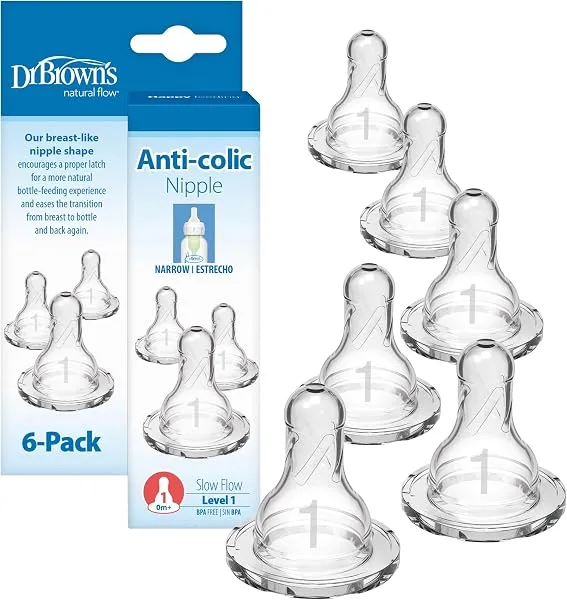
Using Dr. Brown's Options+ narrow bottles, our top pick in the bottle-feeding guide? This is your newborn refill. The breast-like shape encourages a good latch, and the slow, steady flow lets your baby feed at their own pace without gulping. A six-pack means you can swap out a whole set of bottles at once and still keep a spare in the diaper bag.
When your baby is ready for more, Dr. Brown's offers higher levels in the same narrow fit, so moving up is as easy as switching the nipple.
Shop Dr. Brown's Level 1 nipples on Amazon
Philips Avent Natural Response Flow 2 nipples
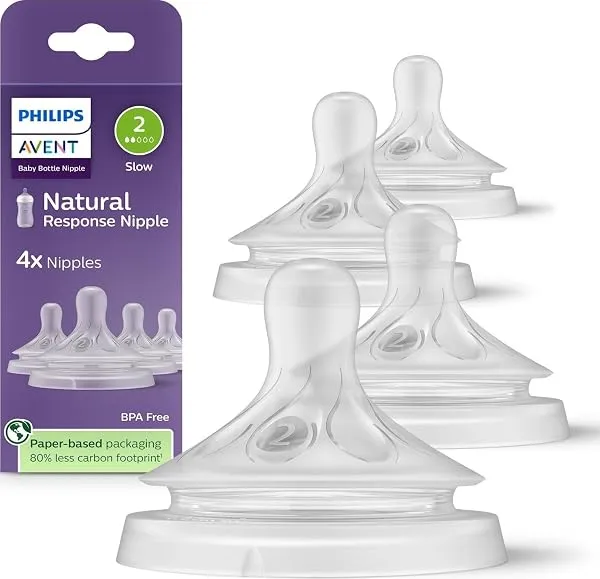
If you use Philips Avent Natural bottles, these are the nipples to keep on hand. The Natural Response tip only releases milk when your baby actively drinks, so they can pause to breathe without milk running into their mouth. The built-in anti-colic valve helps keep air out of your baby's tummy, and the no-drip design means fewer milky puddles in the bag.
Avent's Natural bottles often come with medium-flow nipples, so this four-pack of slow Flow 2 nipples is also an easy way to slow things down for a younger baby.
Shop Avent Natural Response nipples on Amazon
Do you really need to sterilize after every feed?
Not usually, and here's where you win the argument with Mom. The CDC recommends washing bottles and nipples after every feed and sanitizing them at least once a day if your baby is under 2 months old, was born prematurely or has a weakened immune system. For older, healthy babies, daily sanitizing may not be needed as long as everything is cleaned carefully after each use.
- The dishwasher is your friend. If your nipples are dishwasher-safe, take everything apart, rinse it, put the small pieces in a closed basket and run a hot cycle with heated drying or a sanitize setting. That also counts as sanitizing.
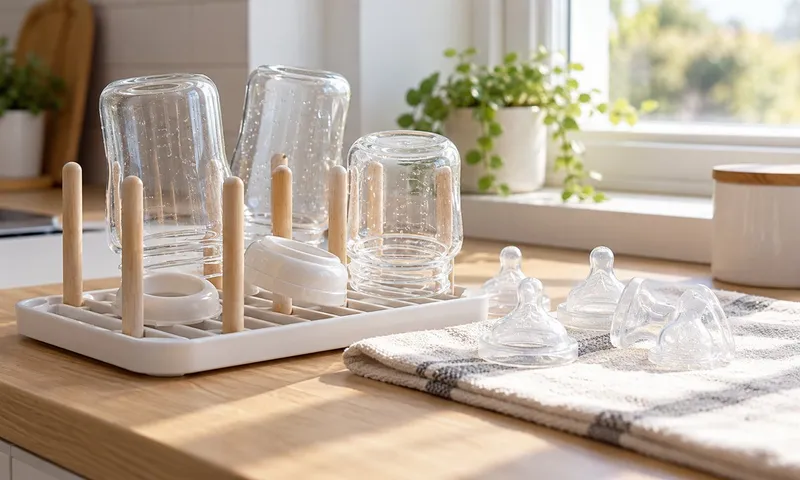
- Washing by hand? Use a clean basin rather than the sink, hot soapy water and a bottle brush you keep just for baby gear, then rinse well.
- Let everything air-dry on a clean towel before putting it away, rather than rubbing it dry.
- Sanitize new bottles and nipples before their first use, following the package directions.
A steam sterilizer and dryer like the Tommee Tippee Steridryer makes the daily newborn routine nearly effortless.
Our recommendation
Put a reminder on your calendar to swap nipples every two to three months, check them before each feed, and replace any that look worn right away. Keeping a spare pack in the cupboard means a torn nipple never derails a feed. If you're using Dr. Brown's narrow bottles, the Level 1 six-pack is the one to grab.
And Mom? She's right that clean matters. You're right that the dishwasher can do the work. Thank her for caring, then go put your feet up.