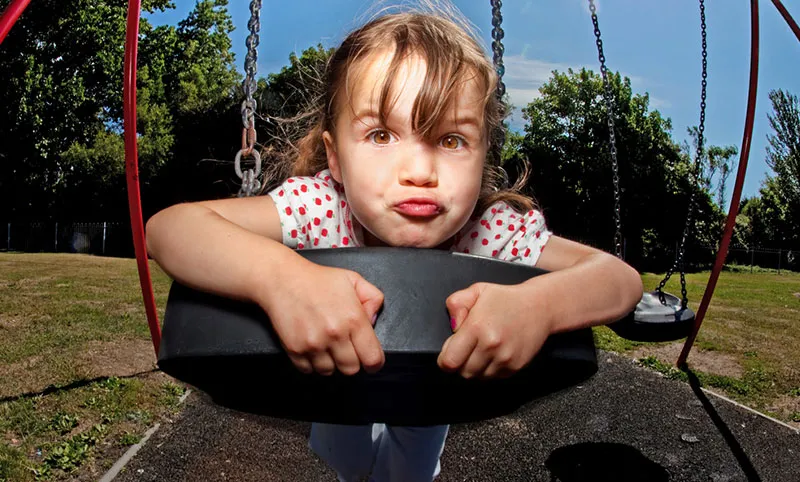
Your child is begging to walk to a friend’s house on their own, or the school field trip permission slip is sitting on the counter, and you catch yourself wondering: do they actually know what to do if something feels wrong? Most kids know “don’t talk to strangers.” Far fewer know what to do when a friendly grown-up asks for help finding a lost puppy, or when someone they know asks them to keep a secret.
The good news is that personal safety is a set of skills, and kids learn skills best through calm, regular practice. Here’s the checklist we’d run through before your child heads off without you, plus four books that make the big conversations feel natural.
Our quick picks: the best personal safety books for kids
- My Body! What I Say Goes!: our top pick for body safety, covering safe and unsafe touch, secrets vs. surprises and a safety network.
- Some Parts Are NOT for Sharing: the gentlest first conversation for toddlers and preschoolers.
- I Said No!: real-life scripts for early-grade kids, told from a kid’s point of view.
- The Berenstain Bears Learn About Strangers: a cozy classic for starting the “strangers” talk with little ones.
Think “tricky people,” not just “stranger danger”
The National Center for Missing & Exploited Children (NCMEC) points out that “stranger danger” on its own isn’t very effective. Most strangers your child will meet are perfectly safe, and some are exactly who they should turn to for help: a police officer, a store clerk with a name tag, a parent with kids in tow. And most children who are abducted are taken by someone they know.
So instead of teaching your child to judge people by how they look, teach them to notice what people do. A safe grown-up doesn’t ask a child for directions, ask them to help find a lost pet, offer them treats or a ride without your okay, tell them “your mom sent me,” or ask them to keep a secret from you. Anyone who does those things is being tricky, even if it’s someone your child has met before.
NCMEC’s four rules every kid can learn
NCMEC’s KidSmartz program boils personal safety down to four rules that are easy for kids in kindergarten through fifth grade to remember:
- Check first. Before going anywhere with anyone, getting in a car or accepting a gift, check with you or the adult in charge.
- Take a friend. Walking, playing outside, going to the park: it’s safer and more fun with a buddy.
- Tell people “no.” Your child is allowed to say no to any adult who makes them feel scared or uncomfortable, then walk away.
- Tell a trusted adult. If anyone asks them to keep a secret, makes them feel uncomfortable, or tries to get them to go somewhere, they tell you or another trusted adult right away.
The child safety checklist
Knowing who they are and how to reach you
- Can your child say their full name, your full name and your phone number? “Mommy” won’t help a store employee find you. Setting your number to a familiar tune makes it stick, and a card with your numbers tucked in the backpack is a good backup.
- Do they know their address? Practice it the same way, starting with the street and town.
- Do they know when and how to call 911? Explain what counts as an emergency, and show them how to make an emergency call from a locked phone. Calling 911 is free.
- Do you have a family code word? If someone else ever has to pick your child up unexpectedly, that person needs to know the word. No word, no ride, no matter what the person says, and your child should keep their distance while asking.
Out and about
- Does your child know to check first before going anywhere? That includes getting into a car, going into someone’s home, or leaving the park with another family, even a neighbor they recognize. Go over the short list of grown-ups they can go with.
- Do they keep their distance from cars? A grown-up in a car who calls a child over to ask for help or directions is a big red flag. Teach them to stay a couple of arm’s lengths away, say “I can’t help you,” and walk away toward people.
- Does your child know what to do if you get separated? Stay inside the store or venue, and ask a worker at the register or a mom or dad with kids for help. Kids should never leave the building or go to the parking lot with anyone, even someone who offers to help them find you.
- Can they spot the helpers? Point out police officers, store employees with name tags and staff in uniforms whenever you’re out, so your child knows exactly who to look for.
- Does your child use public restrooms safely? Little ones should go with you. When they’re old enough to go on their own, wait right outside the door.
- Do they know the safe route? When your child starts walking to school or to a friend’s house, walk the route together and point out safe places to stop for help along the way.
- Does your child know not to open the door when you’re not home, or to tell anyone on the phone or online that they’re home alone?
Speaking up and getting away
- Does your child know it’s okay to say no to an adult? Being polite never matters more than being safe. A ready-made line helps: “I can’t go with you until I check with my mom.”
- Do they know to get loud? If someone grabs them, they should yell “Help! They’re trying to take me!” so nearby adults know what’s happening.
- Do they know they can fight back? Kicking, pulling away and running toward people are all fine when someone is trying to take them somewhere. NCMEC’s data shows that children often get away from attempted abductions by refusing, screaming or fighting back.
Body safety
- Does your child know the correct names for their private parts? Using real words makes it easier for kids to tell you clearly if something has happened, and it sends the message that these aren’t shameful topics.
- Do they know which parts are private? A simple rule: the parts covered by a swimsuit are private. No one should touch them, look at them or take pictures of them, and no one should ask your child to touch theirs. The exceptions, like a doctor’s exam with you in the room, are ones you explain ahead of time.
- Does your child know the difference between a surprise and a secret? A surprise, like a birthday present, is fun and gets told soon. A secret that makes them feel worried, confused or scared should always be told to you.
- Do they have a safety network? Help your child name three to five trusted adults they could go to if they feel unsafe, so they always have someone to tell, even if one person doesn’t listen.
- Do they know it’s okay to say no to hugs and kisses? Offering a high five or a wave instead teaches your child that their body belongs to them, even with family.
- Does your child know they will never be in trouble for telling you? This is the most important item on the list. Promise them you’ll listen, you’ll believe them and you’ll help, even if they broke a rule or weren’t sure whether something was a big deal.
Making it stick
- Practice with “what if” games. “What if someone at the park asked you to help find their puppy?” Calm role-play at the dinner table builds confidence without building fear.
- Repeat it often. One big talk fades fast. Short check-ins before playdates, camp and school trips keep the rules fresh.
- Read together. A good picture book gives you the words, and gives your child a character to talk about when the topic feels too personal.
The best books to teach kids personal and body safety
Picture books are one of the easiest ways to start these conversations. Your child gets to watch a character work through a tricky situation, and you get natural pauses to ask, “What would you do?”
My Body! What I Say Goes!: our top pick for body safety
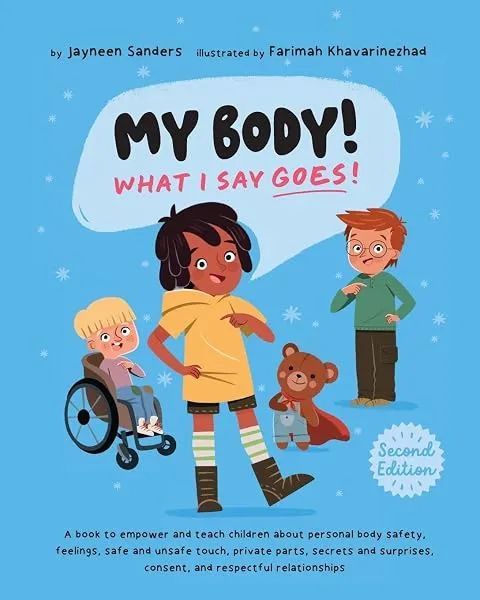
If you only buy one book from this list, make it this one. Jayneen Sanders covers nearly everything on our body safety checklist in a single, upbeat read: the correct names for private parts, safe and unsafe touch, the difference between secrets and surprises, respecting body boundaries and building a safety network of trusted adults.
What we like most is how it gets kids talking. It starts with feelings, so your child learns to notice the “early warning signs” in their own body when something isn’t right. Open-ended questions run throughout the story, and discussion questions at the back help you go deeper. The second edition is written for ages 3 to 10, so it grows with your child from preschool to the later elementary years.
Get My Body! What I Say Goes! on Amazon
Some Parts Are NOT for Sharing: the gentlest start for toddlers
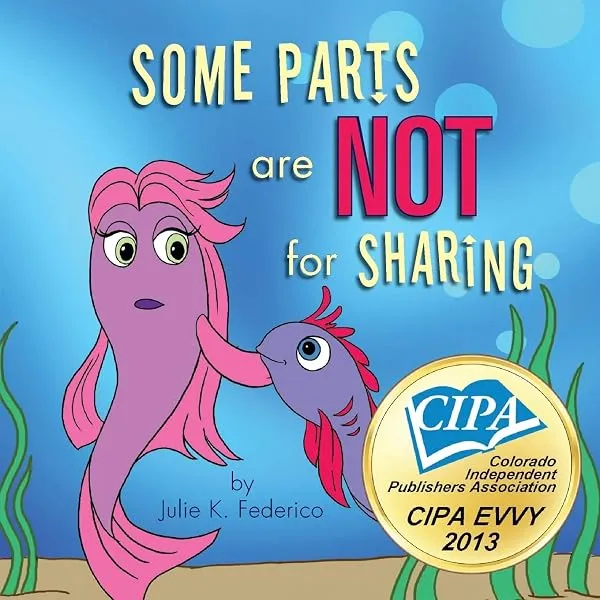
Not sure how to bring up private parts with a two-year-old? Let a pair of friendly fish do it. Former school counselor Julie Federico walks through which parts of our bodies we share (a high five, a hug from a friend) and which we don’t, using simple, straightforward language and sweet undersea pictures.
It’s short and calm enough for the youngest listeners, making it an easy first step before you move on to a more detailed book as your child grows. A Spanish edition is available, too.
Get Some Parts Are NOT for Sharing on Amazon
I Said No!: real-life scripts for early-grade kids
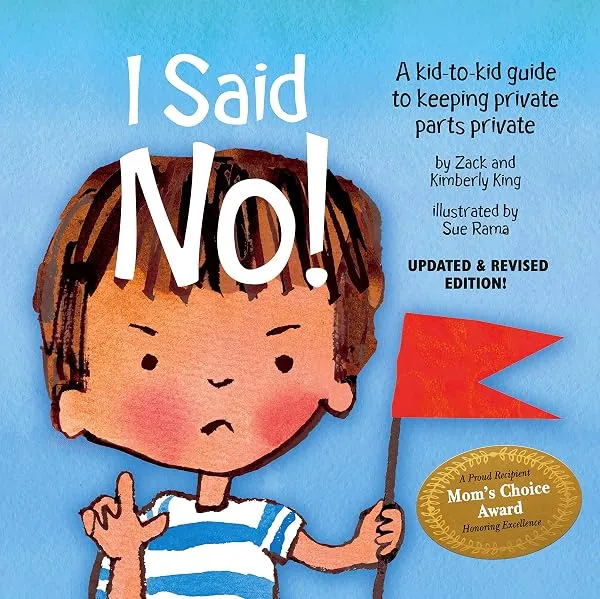
Zack and his mom wrote this book after Zack had an uncomfortable experience with a friend, and that kid-to-kid voice is its superpower. It talks to children the way they talk to each other, without being scary or babyish.
I Said No! is especially good for the situations that are hardest to explain: what’s appropriate and with whom, how to handle bribes and threats, and what to do if the first adult you tell doesn’t listen. An easy system helps kids rehearse their responses until they feel automatic. It’s a strong fit for children around 4 to 7, especially once sleepovers and playdates start.
The Berenstain Bears Learn About Strangers: a classic conversation starter
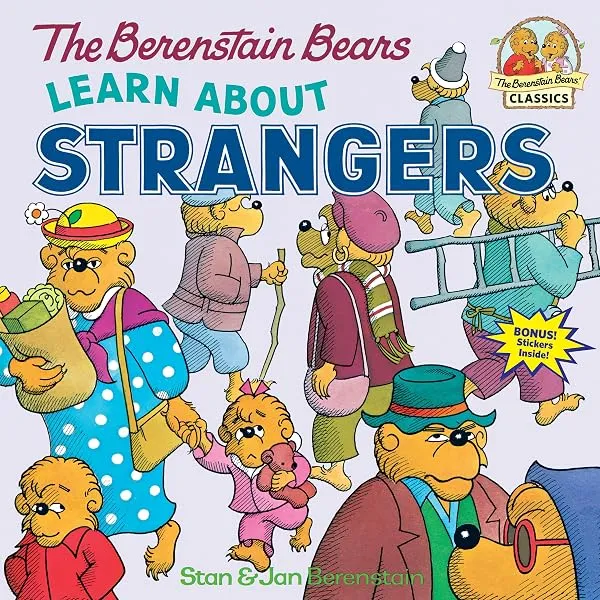
Sister Bear has gotten into the habit of chatting with every stranger she meets, so Papa, Mama and Brother step in to teach her the rules of safety. Plenty of parents grew up with this one, and little ones still love the Bear family.
The story is a great springboard for the “tricky people” idea. As you read, talk about which strangers are helpers and which actions should make Sister Bear check first. A list of Brother and Sister’s Rules for Cubs at the back gives you a ready-made recap, and the bonus stickers are a fun reward for remembering them.
Get The Berenstain Bears Learn About Strangers on Amazon
Our recommendation
Start with the checklist this week: your phone number set to a tune, a family code word and the four rules. Then make My Body! What I Say Goes! part of your bedtime rotation. It covers the body safety conversations parents find hardest, gives you the questions to ask, and stays useful from preschool through elementary school. Add Some Parts Are NOT for Sharing for a toddler, or I Said No! once playdates and sleepovers begin.
Heading into a new school year? Pair this list with our first day of school checklist.